One, Claude, Four, All!
2026-08-27
A post about a quick experiment my team ran this week on keeping planning human in an AI-native world - and to be clear, these are my own reflections, not FanDuel product plans!
Planning in an AI-native world
The world is changing, and the way we plan work is changing too. In an AI-native world we have some amazing new skills at our disposal; Claude superpowers has a brainstorming mode that asks you questions to help you explore a problem before settling on the right direction. It’s collaborative pair planning between you and your Claude. We’ve also got whole marketplaces of skills built for discovery, breakdown, refinement, analytics, risk assessment, whatever aspect of planning you can think of!
Keeping It a Team Sport
This is fantastic, but there’s one big problem that stands out to me. Human collaboration. My favourite days as an engineer have been around a whiteboard in the office, with the smell of marker pens in the air and post-its flying wherever you look! Second to that has been brainstorming on Miro boards with people on other sides of the world. It’s really important that we don’t just have ‘a human in the loop’ when working; we have a team (or pod) of humans. This is how we get diverse thinking, shared understanding, levelled up knowledge that are so key to us building great things for customers whilst building great careers at work.
We’ve Been Here Before
Speaking of the move from physical to virtual whiteboards, the last time we had such a monumental shift to how we plan was when the world went into lockdown in 2020. Initially remote workshops on Zoom were dominated by a few confident voices whilst others found it harder to contribute, and facilitators struggled to bring them into the room without the body language you get in person. Of course we’re much better at this now, partly through practice, partly through better tooling (I’ve mentioned Miro already) but also through different facilitation techniques.
A Technique Worth Trying
My favourite technique I learnt from practicing remote facilitation is One, Two, Four, All which is part of Liberating Structures. From the Liberating Structures website:
In 1-2-4-All, participants first work alone, second in pairs, then in small groups, to generate solutions to a specific challenge. It engages every voice regardless of group size, generating a kaleidoscopic view of perspectives, and expresses ideas people would otherwise keep to themselves. It sets an active tone for a group and diminishes power differentials. It taps into the group’s collective knowledge, leading to better ideas and shared ownership, which simplifies implementation.
Back to our present-day challenge. I'm sure tooling will evolve fast here as AI gets used for real work and not just vibe coding (it probably already has, tell me what's working for you!). But new tooling is slower to adopt at a big company, whereas techniques we can experiment with freely. So that's what we’re going to focus on for now.
Does 1-2-4-All work with Claude in the loop? I figured I’d try it out with my team and see…
One-Claude-Four-All
This week we spent a couple of hours together to try out 1-2-4-All but with Claude replacing the ‘pair’. Here’s how we did it, what we learnt, and what we want to try next…
The Brief
The first decision point was what type of planning this would be most useful for. I’ve used 1-2-4-All in many planning settings but I find it most useful where there’s most value in diverse thinking since it gets everyone inputting before collapsing. So, we decided to use it early in the product development lifecycle where things are a little more exploratory, rather than to break down a well defined problem.
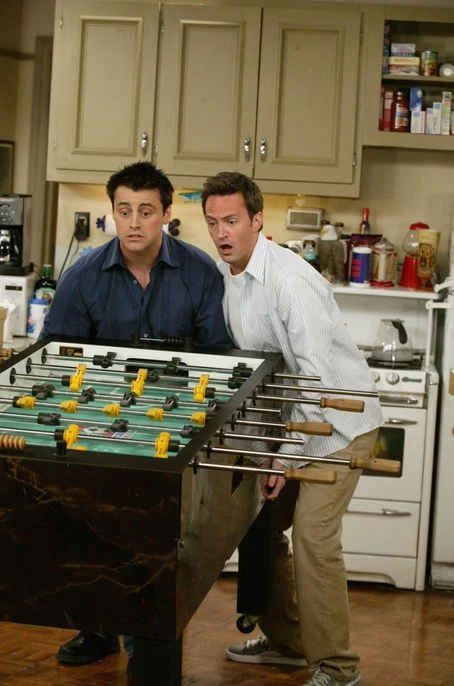
I also didn’t want to use a real work problem as I wanted the output of the morning to be learnings on the technique rather than an actual plan to take forward. So, given the team are office foosball table enthusiasts I gave them the bogus brief:
Currently we offer betting on most major sports, but at a recent customer research event, VIP customer Chanandler Bong informed us that his biggest source of friction is not being able to bet on his favourite sport: competitive table foosball. We hypothesise that if we could offer this new sport then our weekday VIP conversion rate would increase by at least X%.
(For the avoidance of doubt, this is a made up customer problem, Chanandler Bong is not a real person, and nobody really knows what his job is)
The Format
The main thing to consider was when to bring Claude into the loop and the obvious first place to try was to replace the ‘pair’ in 1-2-4-all so that it’s now a human and their Claude pair.
ONE
Think independently on a notepad. How would you approach this? What would you test/build first and why?
CLAUDE
Work with Claude to iterate thinking.
FOUR
Pair up 2 people each with the output of their Claude session.
Some groups continued using Claude at this point and used it to try to merge their thinking, others avoided AI at this point and focussed more on discussion and noting their output.
ALL
Each pair presents back to the main group and we try to synthesise into a full team view.
We used Claude again here to get a full summary before moving quickly onto a retro of how the workshop went. In reality, I would spend much more time in this section having an in the room discussion, debating points of difference before coming to a team conclusion.
What we learnt
The team really enjoyed the exercise. In the main people felt that it was easier to contribute, easier to share ideas:
Everyone being able to contribute and have their own perspective + input is a significant upside
It's much easier to capture everyone's input who wishes to input and they can think independently
A lot more interactive, easier to stay engaged
It wasn’t universally positive though:
It loses conversation and inter-human interactions and the potential stuff which emerges. I feel like group discussions absent of AI are an important part of thinking and can lead to a final thing which exceeds just the sum of the parts.
I actually prefer one person driving Claude whilst we discuss on call
Interestingly both of these points were from one of the pairs that used Claude the most during the merging part of the exercise. Of course this is a small sample but we agreed that next time we run this we’d be more deliberate about when not to use AI.
When did AI help?
Claude helped put structure around messy thinking, and generating diagrams to visualise ideas quickly.
When did it get in the way?
One of our main issues was that the default output is naturally verbose, and walls of text aren’t easy to parse for groups of people working under time pressure. (Of course walls of text aren’t unique to AI - this blog post is written by a human, honest!) A more condensed, visual style would have helped.
Our output wasn’t well defined upfront either, and people found it difficult to avoid Claude going down rabbit holes whilst they were still in ‘diverge’ mode. We agreed that most of these problems could be solved by thinking carefully about what skills we use and built, and making them tailored to this kind of workshop.
What we’d change next time
More scaffolding up front - skills built specifically for the workshop, clearer outputs. There’s lots of work going on at the moment around output templates, charters etc, so this is something we’ll definitely get better at when we bring the technique into the real world.
So did it work?
My answer is the ‘One’ and the ‘Claude’ parts worked well but the ‘Four’ and the ‘All’ need more work. One-Claude-Four-All got everyone contributing, which is exactly what I was after, but it made the human conversation during the merging parts harder; and the human conversation was one of the reasons we wanted to try this in the first place. When we use this in a real life workshop we’ll protect those parts for in depth human discussion and minimise Claude usage at those points, before bringing it back in to capture output.
Summing Up
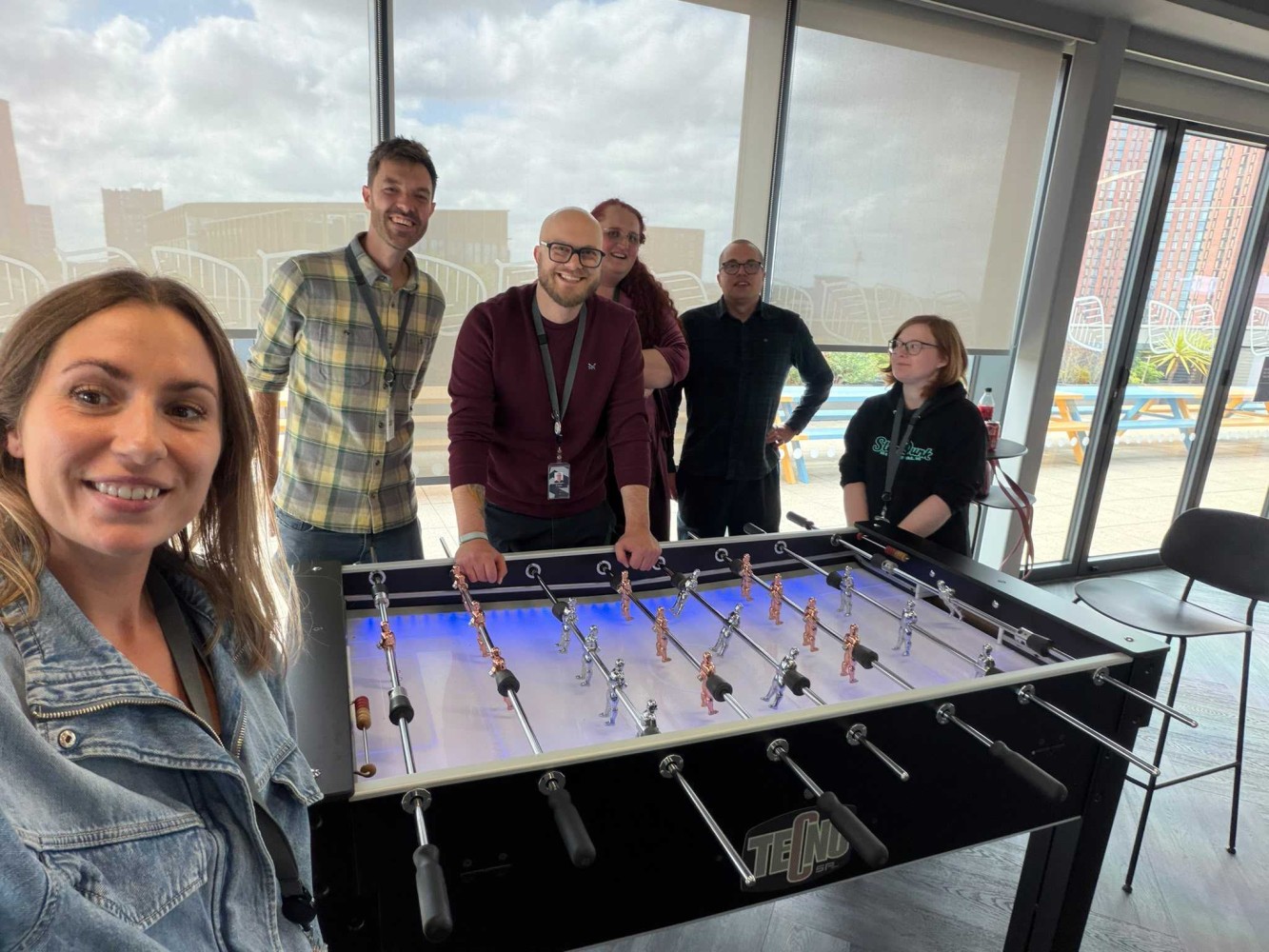
We had fun, learnt some things, and ended with a game of real life foosball to cap off the morning! Within the team, we’re going to keep experimenting. Please reach out if you’ve got other techniques you think we should try to keep things human and collaborative whilst using AI for planning, I’d love to hear from you!